
How long does your car battery last?
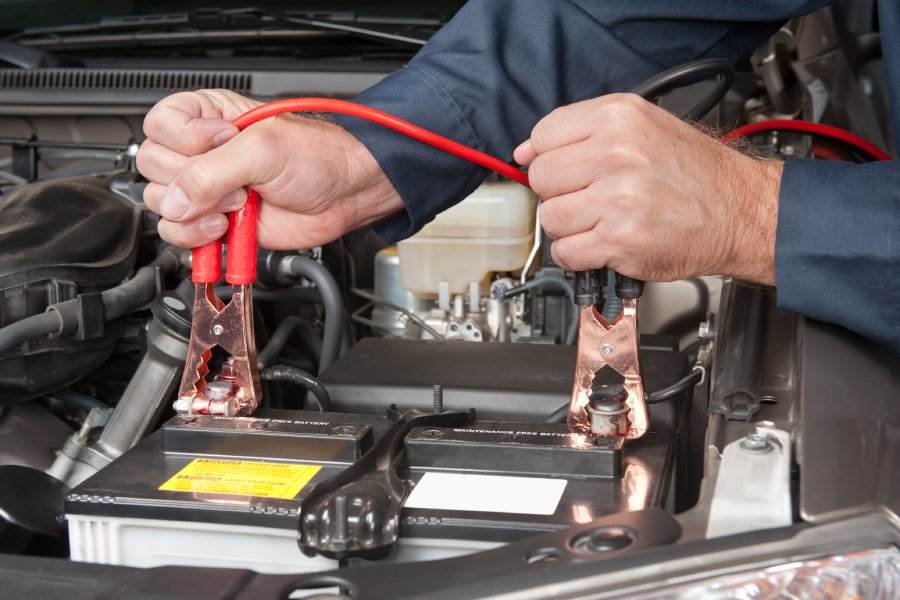
Due to differences in quality, type, usage, and maintenance, there is no fixed lifespan for a car battery. However, generally, many sources cite an average of three to five years, although some car batteries have been known to last up to 10 years. It is quite varied. Let’s take a closer look at some of these “variations” that can affect the lifespan of a battery.
Quality of car batteries
As with many items, some batteries are better than others. In the case of car batteries, it partly depends on the quality of the battery.
Batteries lose a lot of their power when the temperature drops, so their cold-cranking amps rating is important as it is measured at 0 degrees Fahrenheit (where a battery has typically lost about 60% of its maximum starting power) and thus represents a sort of worst-case scenario for the battery. Since batteries also tend to lose power over time, a battery that offers more CCA when new may lose some but still retain the power needed to start your car, while one bought at the same time with a lower CCA rating may have deteriorated to the point of not being able to do its job anymore.
Additionally, as batteries lose some of their life by simply sitting idle, the battery you purchased as “new” might actually have been manufactured months earlier and spent the interim time degrading on a shelf.
Types of car batteries
The conventional car battery has long been what is called a lead-acid battery, which mainly contains lead plates immersed in sulfuric acid. But in recent years, another type has emerged, called an absorbent glass mat (AGM) battery. It operates on the same principle, but instead of being in liquid form, the acid is contained in mats of glass fibers surrounding the lead plates. These batteries are more expensive, but they tend to have higher power density, can undergo more charge and discharge cycles, are not as sensitive to deep discharge, do not leak, recharge faster, and are less vulnerable to vibrations.
AGM batteries are often found as original equipment in cars using start-stop technology to save fuel, where the engine shuts off automatically when you come to a stop and then restarts automatically when you release the brake. Since starting the engine requires an extremely high power demand and battery wear, these frequent engine starts would likely kill a regular battery fairly quickly.
If your car does not have start-stop technology, or did not come with an AGM battery, you may consider upgrading. However, this will cost more, and you need to ensure your car is compatible; for example, your alternator might produce too much power, which could damage an AGM battery. Therefore, it is advisable to have the battery installed by a professional who knows to check such things, like the alternator output, beforehand.
Battery usage
As hard as starting an engine can be, letting the car sit idle is not good for the battery either. Some of this is due to the fact that a battery naturally discharges over time, and starting the car activates the alternator, which recharges the battery as you drive. (Note that the alternator also has to power all the devices used when your car is running, and since the alternator does not produce much, if any, power at idle, it will not recharge the battery much on a short trip.) But on modern cars, there is another issue.
There are many computers and electronic devices in newer cars that require battery power to keep their memory active, and they consume power even when the car is “off”. For example, for cars equipped with remote locks, there is a small receiver that is constantly “listening” for a radio signal from your key fob, and this receiver draws power from the battery. All of this explains why the battery can drain just by staying in the car, as has happened in recent years when people suddenly started working from home and rarely went out.
Maintenance of car battery
It is not good for a regular lead-acid battery to be kept in a discharged state (although AGM batteries are not as sensitive to this), so even if the battery is not “dead” when you try to start your car after a long period of inactivity, it wears the battery out. If the vehicle has been unused for a long time, try to drive it for a while, ideally on the highway, to fully recharge it.
If your car is often unused for long periods, you may consider using what is called a “battery maintainer” or “battery tender,” which plugs in like a battery charger but is designed not to overcharge the battery – which a battery charger can do if left plugged in too long. Note that a maintainer is not good for charging a weak battery; it only maintains a fully charged battery at its maximum.
Extreme temperatures also affect the lifespan of a battery. While we often think cold weather is hard on a battery, and it does indeed reduce its power, heat is actually worse for longevity. Keeping your car shaded in the summer (or ideally in a garage all year) is an advantage.
Signs of a failing battery
Slow engine cranking or unusual electrical problems are usually an initial sign that your battery may be nearing the end of its life. This includes headlights or interior lights flickering slowly after starting, the engine running rough for a few seconds after starting, and loss of Bluetooth settings or radio presets in the car. The battery casing swelling on the sides is another indication of a failing battery.
However, it is best to have your battery tested. While this does not necessarily extend the life of your battery, having it tested periodically can help prevent it from going flat at the worst moment – which is practically any time. After two years, it is often recommended to have it tested with every change of season, or at least with every oil change. If the battery shows signs of weakness, a good charge may help, but it is more of a warning that you may want to get a new battery before the next cold spell.
With information from Cars.com
The text Combien de temps dure votre batterie d’auto is from L’annuel de l’automobile – Actualité automobile

